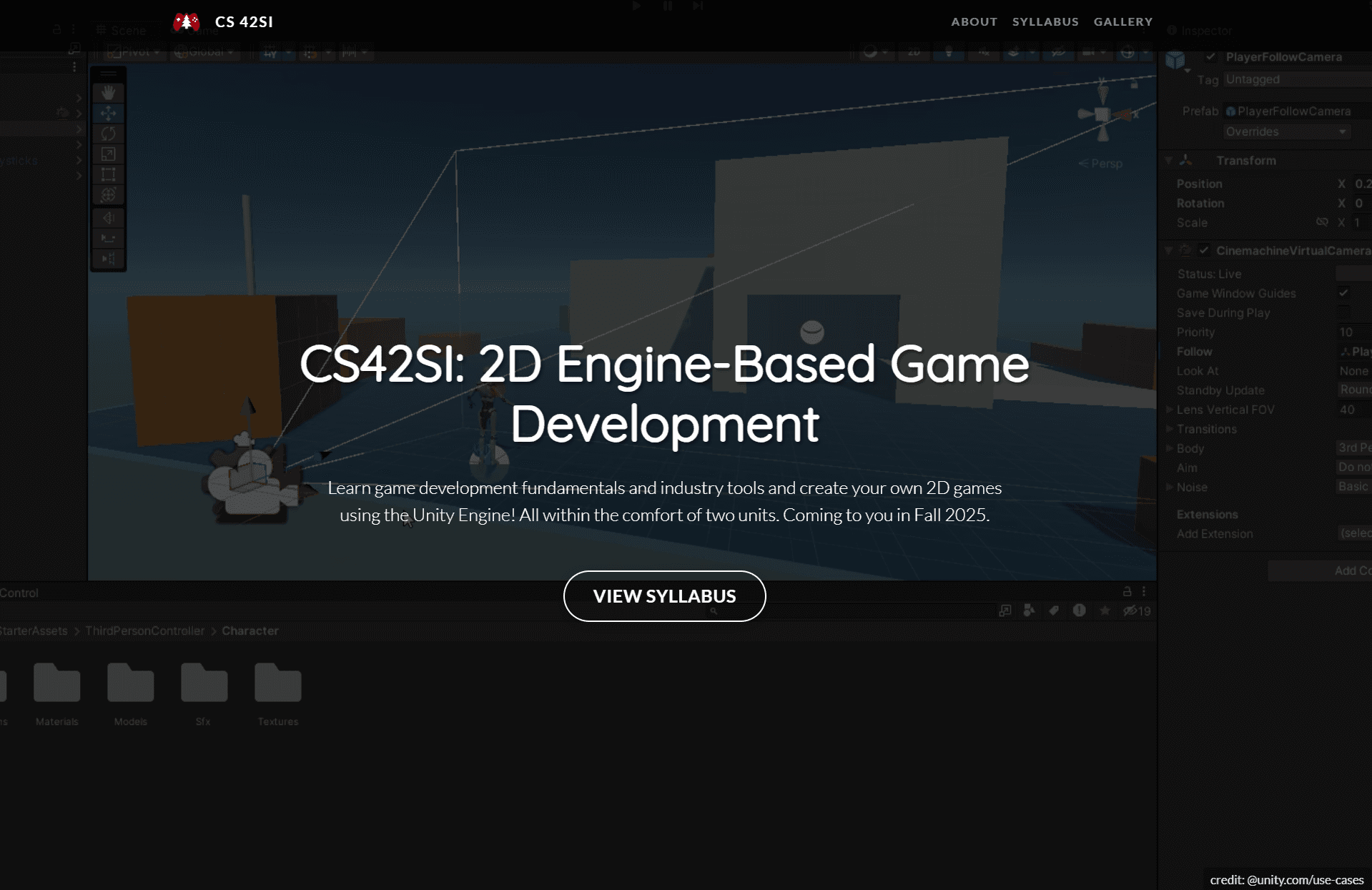
CS42SI Course


Original curriculum for CS42SI, a game design course I teach at Stanford University. Came out of my passion to create more game development opportunities at Stanford.

CS42SI: From Player to Maker is an original course I teach at Stanford University. The class gives students a structured way to design and build games that teach something meaningful, combining game design theory, rapid prototyping, and feedback from real players.
The course grew out of a desire to create more opportunities for students to explore game development, and focuses on building playful experiences in the Unity Engine. At its time, it was the only game design course at Stanford that formally taught game production in a game engine.
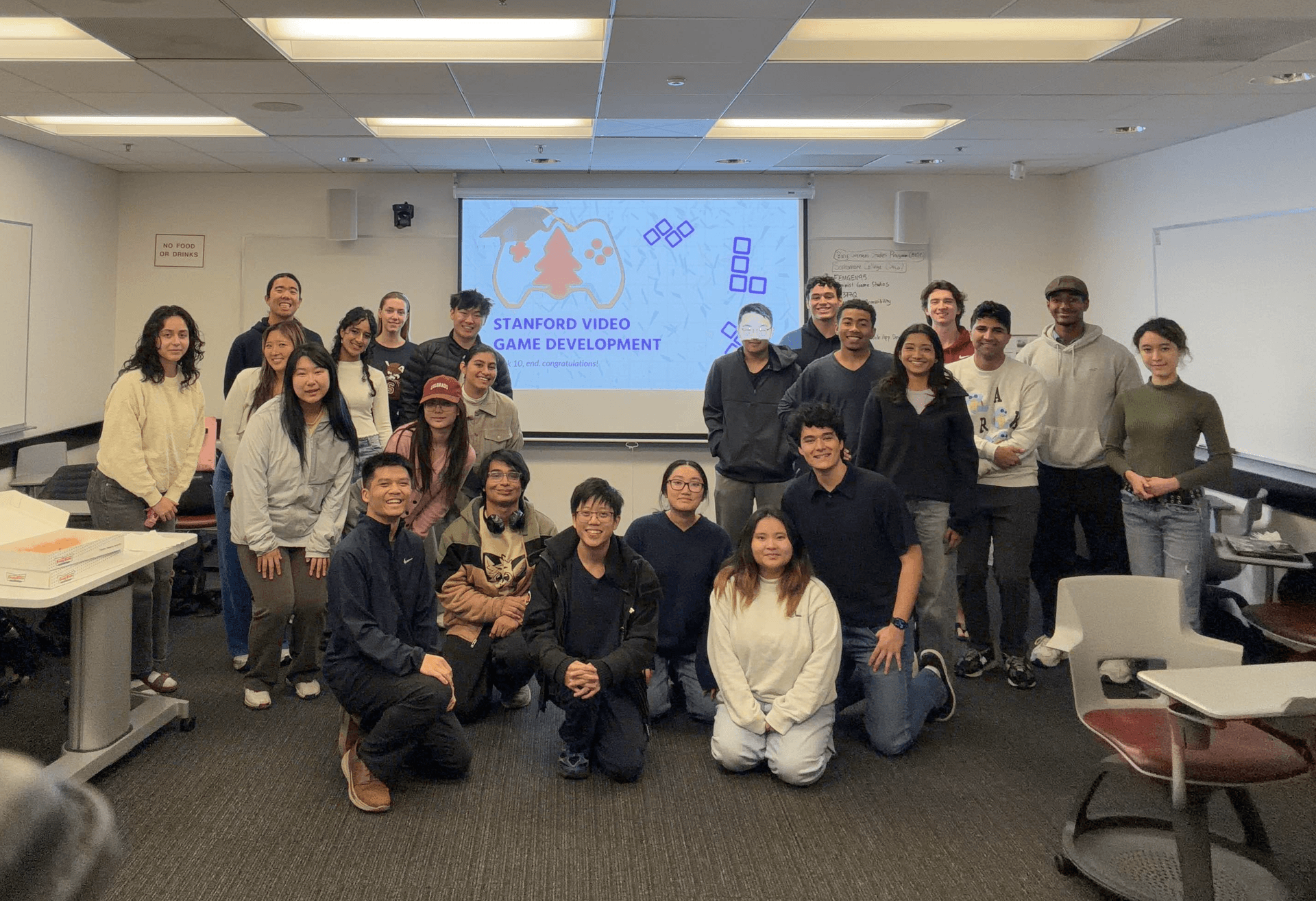
CS42SI end-of-quarter showcase, Fall 2025
Course structure and learning goals
In the course, students learn concepts in game design like MDA Analysis, ludonarrative design, game feel, and more. They also learn how to code in C# in the Unity engine to build games, and how to use Git version control to manage shared codebases.
The first half of the course is structured around lectures and rapid implementation assignments, while the second half is project work and playtesting.
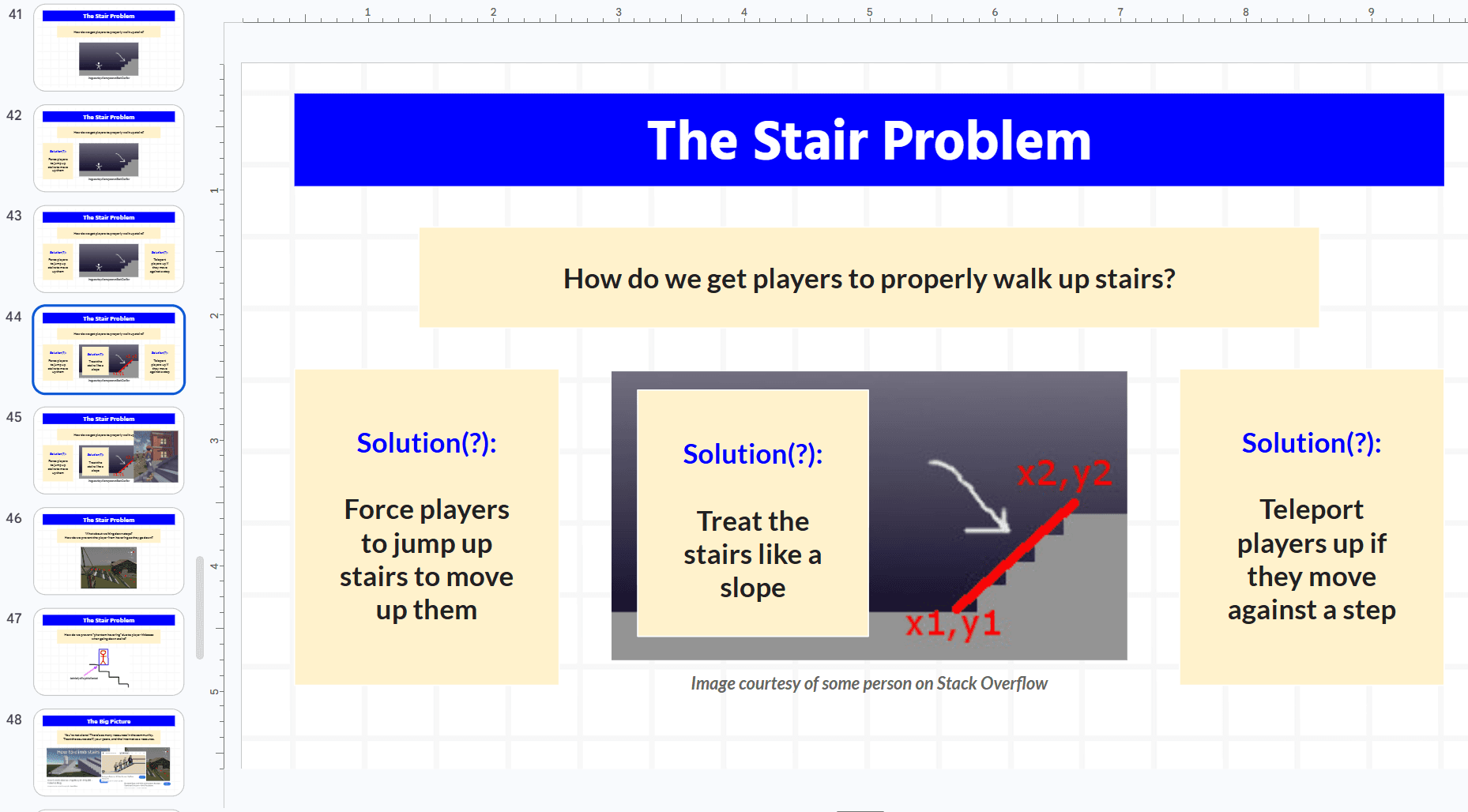
Lecture slide example (stair problem)
Student projects and playtesting
A core part of the course is iterative playtesting. Rather than having midterms or final exams, students develop a culminating final project by the end of the quarter. Before the final showcase, groups of students bring in early versions of their games, run short playtests with classmates, and give/receive feedback to understand what players actually experience versus what they intended.
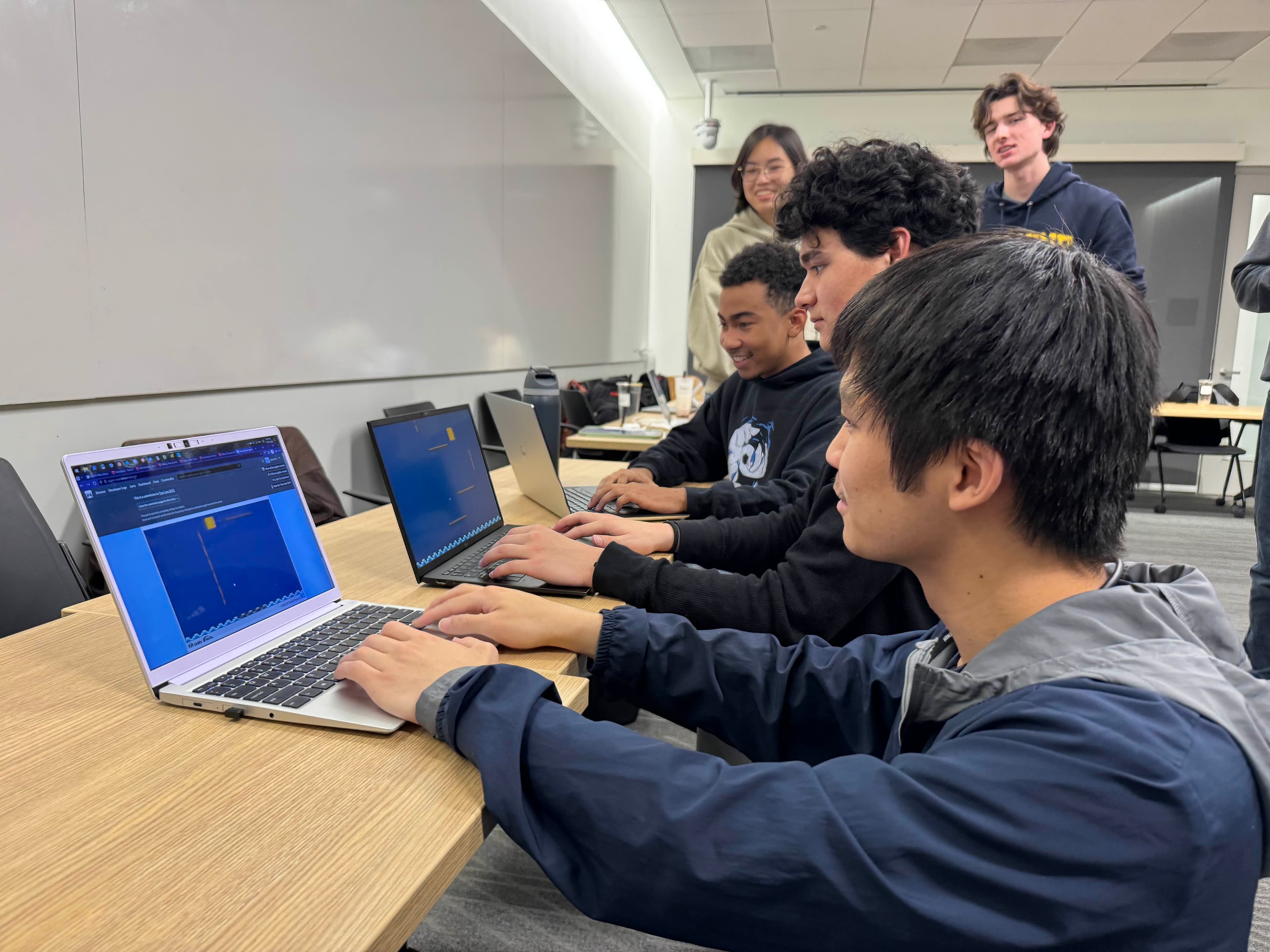
Student projects and in-class playtesting
Curriculum and public-facing materials
I also designed the public-facing course website, which hosts the full syllabus, assignments, and examples of student work. (View past winners of our hosted game jams at the bottom of the webpage!) The site is designed to be easy to scan for both enrolled students and anyone curious about the course.
Public-facing course website and curriculum